
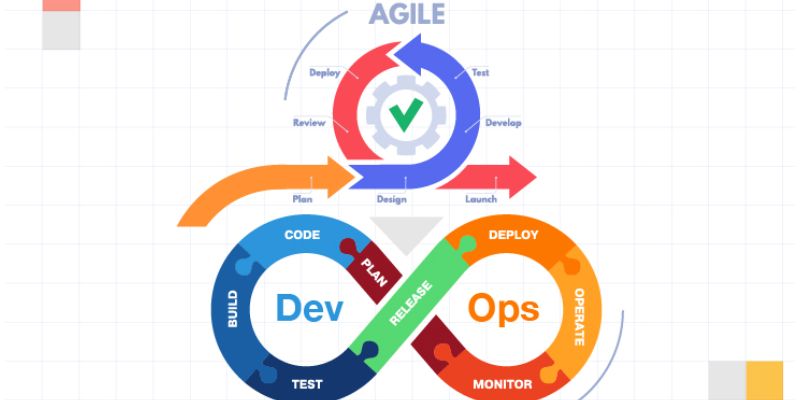
Agile development and DevOps have become synonymous with modern software development methodologies, revolutionizing the way teams collaborate, deliver, and iterate on software products. While Agile focuses on iterative development and customer feedback, DevOps emphasizes collaboration, automation, and continuous delivery. In this blog post, we’ll explore how DevOps supports the principles of Agile development and how their integration enhances software delivery pipelines. Are you looking to advance your career in DevOps? Get started today with the DevOps Training in Chennai from FITA Academy!
Agile Principles
Agile development is built on a set of principles outlined in the Agile Manifesto. These principles prioritize customer satisfaction, continuous delivery, collaboration, and flexibility. Agile methodologies such as Scrum and Kanban provide frameworks for implementing these principles in software development processes. Key aspects of Agile include iterative development, frequent releases, and close collaboration between cross-functional teams.
DevOps Fundamentals
DevOps, on the other hand, aims to bridge the gap between development and operations teams by fostering a culture of collaboration, automation, and continuous delivery. DevOps practices include continuous integration (CI), continuous delivery (CD), infrastructure as code (IaC), and automated testing. By breaking down silos and automating repetitive tasks, DevOps accelerates the software delivery lifecycle while maintaining high quality and reliability.
Alignment with Agile Principles
Iterative Development
Agile promotes iterative development cycles, with small, incremental changes made to software products based on user feedback. DevOps complements this by enabling continuous integration and delivery, allowing teams to quickly integrate and test code changes in a production-like environment. This iterative approach ensures that feedback is incorporated early and often, leading to faster innovation and improved product quality.
Customer Collaboration
Agile emphasizes customer collaboration throughout the development process to ensure that the product meets their evolving needs. DevOps supports this principle by enabling rapid feedback loops and shorter release cycles. By automating testing and deployment processes, DevOps teams can quickly address customer feedback and deliver value to end-users more frequently. Learn all the DevOps techniques and become a DevOps developer. Enroll in Devops Online Course to understand more concepts in detail.
Cross-Functional Teams
Agile encourages cross-functional teams composed of developers, testers, designers, and other stakeholders working together towards a common goal. DevOps extends this collaboration by breaking down barriers between development, operations, and other functional areas. By fostering a culture of shared responsibility and accountability, DevOps teams can deliver software more efficiently and reliably.
Embracing Change
Agile embraces change and responds quickly to evolving requirements and market conditions. DevOps aligns with this principle by enabling continuous delivery and deployment pipelines that can adapt to changing business needs. Automated testing and infrastructure provisioning help mitigate risks associated with frequent changes, allowing teams to innovate with confidence.
In conclusion, DevOps and Agile are complementary methodologies that share common goals of delivering high-quality software products quickly and efficiently. By integrating DevOps practices with Agile principles, organizations can accelerate their software delivery pipelines, improve collaboration between teams, and better respond to customer feedback. The combined power of Agile and DevOps enables organizations to stay competitive in today’s fast-paced digital landscape, driving innovation and delivering value to customers with greater speed and agility. Looking for a career as a DevOps developer? Enroll in this Advanced Training Institute in Chennai and learn from experts about DevOps testing techniques and tools.
Read more: DevOps Interview Questions and Answers